Agroup of at least five carrier-capable U.S. Navy E-2D Advanced Hawkeye airborne early warning and control planes arrived overnight in the Azores after crossing much of the Atlantic. The Azores is a common stopover point for U.S. military aircraft heading to the Middle East. The move is somewhat rare for the E-2 community, but it’s extremely logical, and likely highly urgent, considering what is going on in the Middle East.
In many respects, the E-2D is the most sensitive airborne ‘look-down’ radar platform in U.S. military service today. As far as we know, the only E-2Ds in the Middle East right now are supporting air wing operations of the USS Gerald R. Ford and USS Abraham Lincoln. Rushing more of them to the Persian Gulf for land-based operations to help spot low-flying Iranian kamikaze drones wreaking havoc on Arab Gulf States would make total sense.
We have seen a similar request accepted by the Royal Australian Air Force, which is sending one of its highly capable E-7 Wedgetail airborne early warning and control aircraft to the region for essentially the same purpose. Australia’s commitment is separate from current U.S.-Israeli operations. Both the E-2D and the E-7 aircraft can also spot low-flying cruise missiles, short-range ballistic missiles, and even maritime threats, making them ideal for the littoral operations against everything Iran is throwing at U.S. allies in the region. The Hawkeye and Wedgetail also offer additional battle management and networking capabilities, which U.S. forces engaged in operations against Iran are currently relying heavily on a strained fleet of aging E-3 Sentry jets to provide.
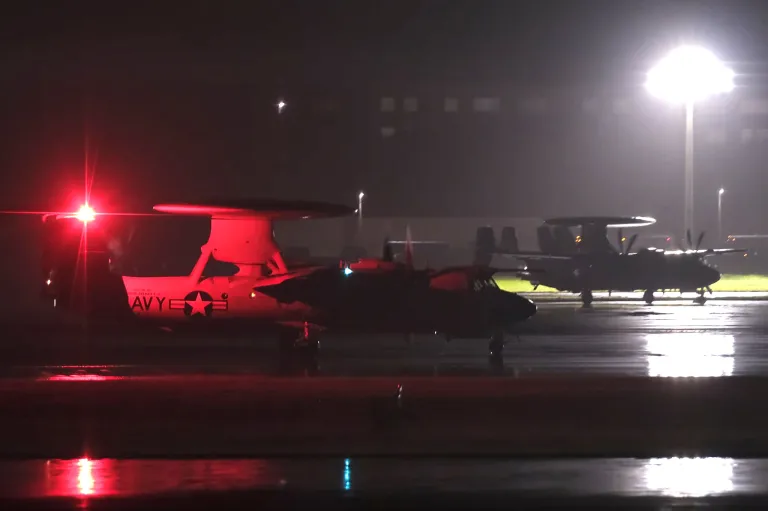
Agroup of at least five carrier-capable U.S. Navy E-2D Advanced Hawkeye airborne early warning and control planes arrived overnight in the Azores after crossing much of the Atlantic. The Azores is a common stopover point for U.S. military aircraft heading to the Middle East. The move is somewhat rare for the E-2 community, but it’s extremely logical, and likely highly urgent, considering what is going on in the Middle East.
In many respects, the E-2D is the most sensitive airborne ‘look-down’ radar platform in U.S. military service today. As far as we know, the only E-2Ds in the Middle East right now are supporting air wing operations of the USS Gerald R. Ford and USS Abraham Lincoln. Rushing more of them to the Persian Gulf for land-based operations to help spot low-flying Iranian kamikaze drones wreaking havoc on Arab Gulf States would make total sense.
We have seen a similar request accepted by the Royal Australian Air Force, which is sending one of its highly capable E-7 Wedgetail airborne early warning and control aircraft to the region for essentially the same purpose. Australia’s commitment is separate from current U.S.-Israeli operations. Both the E-2D and the E-7 aircraft can also spot low-flying cruise missiles, short-range ballistic missiles, and even maritime threats, making them ideal for the littoral operations against everything Iran is throwing at U.S. allies in the region. The Hawkeye and Wedgetail also offer additional battle management and networking capabilities, which U.S. forces engaged in operations against Iran are currently relying heavily on a strained fleet of aging E-3 Sentry jets to provide.
Continued at link below:
https://www.twz.com/air/navy-e-2d-hawkeye-radar-planes-appear-to-be-rushing-to-the-middle-east